
Union Budget 2026: A Holistic Push for Renewables, Storage, Critical Minerals and E-Mobility

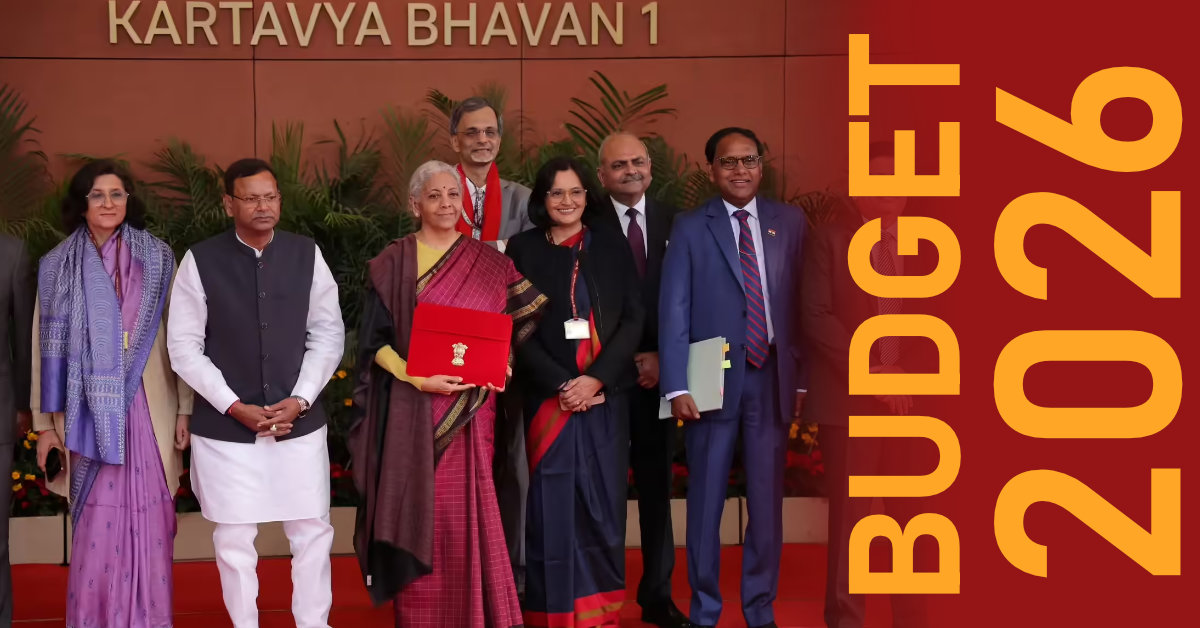
The Union Budget 2026, presented by Finance Minister Smt. Nirmala Sitharaman on February 1, 2026, marks a pivotal moment in India’s journey toward Viksit Bharat. As the first budget crafted in the newly inaugurated Kartavya Bhawan, it embodies the principles of balanced ambition, inclusive growth, and pragmatic policymaking. With overarching themes of “Action Over Ambivalence, Reform Over Rhetoric, and People Over Populism,” the document aims to convert national aspirations into tangible achievements, emphasizing energy security, reduced import dependency, structural reforms, fiscal prudence, monetary stability, robust public investment, citizen-centric policies, and fostering domestic manufacturing for sustained economic growth.
Inspired by three core kartavyas – accelerating and sustaining economic growth, fulfilling people’s aspirations, and realizing the vision of Sabka Sath, Sabka Vikas – the government has rolled out over 350 comprehensive economic reforms. These include streamlining GST, notifying labor codes, and rationalizing mandatory quality control orders.
Core Initiatives Supporting Clean Energy and Electric Vehicles
The budget dedicates significant resources and policy measures to bolster the clean energy and electric vehicle (EV) sectors, recognizing their critical role in India’s sustainable development and global competitiveness. Each announcement is analyzed below for its potential impact on the respective segments.
1. Enhanced Allocations for Renewable Energy Deployment: The Ministry of New and Renewable Energy (MNRE) has received a substantial allocation of ₹32,914.7 crore, a 30% increase from the revised estimates of ₹25,301.22 crore for 2025-26. This signifies a strong commitment to clean energy deployment, domestic manufacturing, and grid integration as India accelerates its energy transition. This increased funding is expected to drive rapid capacity addition, support grid infrastructure development, and enhance the financial viability of renewable projects, ultimately contributing to India’s target of 500 GW non-fossil capacity by 2030.
2. Pradhan Mantri Surya Ghar: Muft Bijli Yojana (₹22,000 crore allocation): This flagship scheme, aimed at providing free electricity to residential sectors through rooftop solar installations, has been allocated ₹22,000 crore, a 10% increase from the previous year’s budget estimates and a 29% hike from the revised estimates of ₹17,000 crore for 2025-26. The scheme targets the installation of rooftop solar in 10 million households by 2027, with 2,396,497 households having already benefited as of December 2025. This allocation will significantly boost decentralized solar generation, reduce household electricity bills, and contribute to rural electrification, thereby enhancing energy access and affordability for millions of Indians.
3. Pradhan Mantri Krishi Urja Suraksha evam Utthaan Mahabhiyan (PM KUSUM) (₹50 billion allocation): The allocation for this program, which bolsters energy security for farmers, has increased from ₹26 billion last year to ₹50 billion in Budget 2026. This funding will support the installation of solar pumps and grid-connected solar plants on barren lands, empowering farmers with reliable and cost-effective irrigation, reducing diesel consumption, and generating surplus power for sale to the grid, thus improving farmer incomes and rural economies.
4. Solar Power Grid Segment (₹1,775 crore allocation): An allocation of ₹1,775 crore has been designated for the solar power (grid) segment, reinforcing India’s commitment to renewable energy transition. This funding will be instrumental in upgrading and expanding transmission infrastructure to evacuate power from solar-rich regions, mitigating curtailment issues, and ensuring smooth integration of large-scale solar projects into the national grid, thereby enhancing grid stability and reliability.
5. Customs Duty Rationalization for Domestic Manufacturing: To strengthen the “Aatmanirbhar Bharat” vision in renewable manufacturing, the budget introduces critical customs duty reforms to lower production costs.
Sodium Antimonate for Solar Glass (Nil BCD): The basic customs duty (BCD) on sodium antimonate, an essential raw material for manufacturing solar glass, has been slashed from 7.5% to nil. This move is expected to reduce production costs and improve raw material availability for domestic manufacturers, potentially attracting new investments in solar glass manufacturing and making Indian solar modules more competitive globally.
Lithium-Ion Cells for Battery Energy Storage Systems (BESS) (Nil BCD): The BCD exemption on capital goods used for manufacturing lithium-ion cells for batteries has been extended to those used for manufacturing lithium-ion cells for BESS. This is anticipated to significantly reduce capital expenditure for cell manufacturing and BESS projects, encouraging large-scale grid-scale storage manufacturing in India and addressing the intermittency of renewable energy sources.
Critical Minerals Processing (Nil BCD): The BCD on imports of capital goods required for processing critical minerals in India has been exempted, signaling a strategic view of raw material security. This will facilitate the establishment of domestic refining capabilities for lithium, cobalt, and rare earth elements, reducing import dependence and securing supply chains for EVs and renewable technologies.
6. Establishing Dedicated Rare Earth Corridors: To promote mining, processing, research, and manufacturing, dedicated rare earth corridors will be established in mineral-rich states of Odisha, Kerala, Andhra Pradesh, and Tamil Nadu. This complements a program for rare-earth permanent magnets launched in November 2025. These corridors are expected to create integrated industrial ecosystems, generate employment, and ensure a stable domestic supply of critical minerals essential for EV motors, wind turbines, and various clean technologies, thereby reducing vulnerability to international supply disruptions.
7. Carbon Capture, Utilization, and Storage (CCUS) Scheme (₹20,000 crore allocation): A landmark ₹20,000 crore outlay over five years has been proposed for the CCUS scheme, targeting hard-to-abate sectors such as power, steel, cement, refineries, and chemicals. This initiative aims to achieve higher readiness levels in end-use applications across these industrial sectors. The allocation will accelerate technological advancements, de-risk private investments, and promote the reuse of captured carbon, playing a crucial role in decarbonizing heavy industries vital for economic growth while aiding India’s net-zero goals by 2070.
8. Nuclear Power Project Imports (Extension of BCD exemption till 2035): The basic customs duty exemption on imports of goods required for nuclear power projects has been extended until 2035 and expanded to cover all nuclear plants, irrespective of capacity. This move supports manufacturing requirements critical to expanding nuclear energy infrastructure. The extension will lower project costs, improve tariff competitiveness, and attract private participation in the nuclear sector, thereby diversifying the energy mix and providing a stable, low-carbon baseload power source to complement intermittent renewables.
9. Biogas Blended CNG (Exclusion of biogas value from excise duty): The entire value of biogas will be excluded when calculating the central excise duty payable on biogas-blended CNG. This step is expected to improve the commercial viability of waste-to-energy projects and encourage cleaner fuel adoption. By reducing the tax burden on the renewable component, this measure will make bio-CNG more competitive with conventional CNG, promoting its widespread use in transportation and cooking, thereby reducing greenhouse gas emissions and enhancing energy security.
10. Restructuring Power Finance Corporation (PFC) and Rural Electrification Corporation (REC): The government proposes restructuring PFC and REC to improve scale and efficiency among public sector non-banking financial companies (NBFCs) operating in the power sector. This is aimed at enhancing credit flow and execution discipline across the power sector. Improved financial health and operational efficiency of these institutions will facilitate smoother financing for renewable energy projects, grid upgrades, and distribution reforms, ensuring timely project completion and better service delivery.
11. Viability Gap Funding (VGF) for Battery Energy Storage Systems (BESS) (₹1,000 crore allocation): The allocation for VGF for BESS has been scaled up significantly, rising from ₹200 crore in 2025-26 to ₹1,000 crore in Budget 2026-27. This funding will bridge the financial gap for BESS projects, making them economically viable and attractive for investors. By supporting the development of grid-scale energy storage, this measure will mitigate the variability of renewable energy, stabilize the grid, and enable greater penetration of solar and wind power, paving the way for a resilient and sustainable energy future.
These initiatives collectively demonstrate a holistic approach to transforming India’s energy landscape, positioning the country as a global leader in clean technology and sustainable development.

Comments are closed.